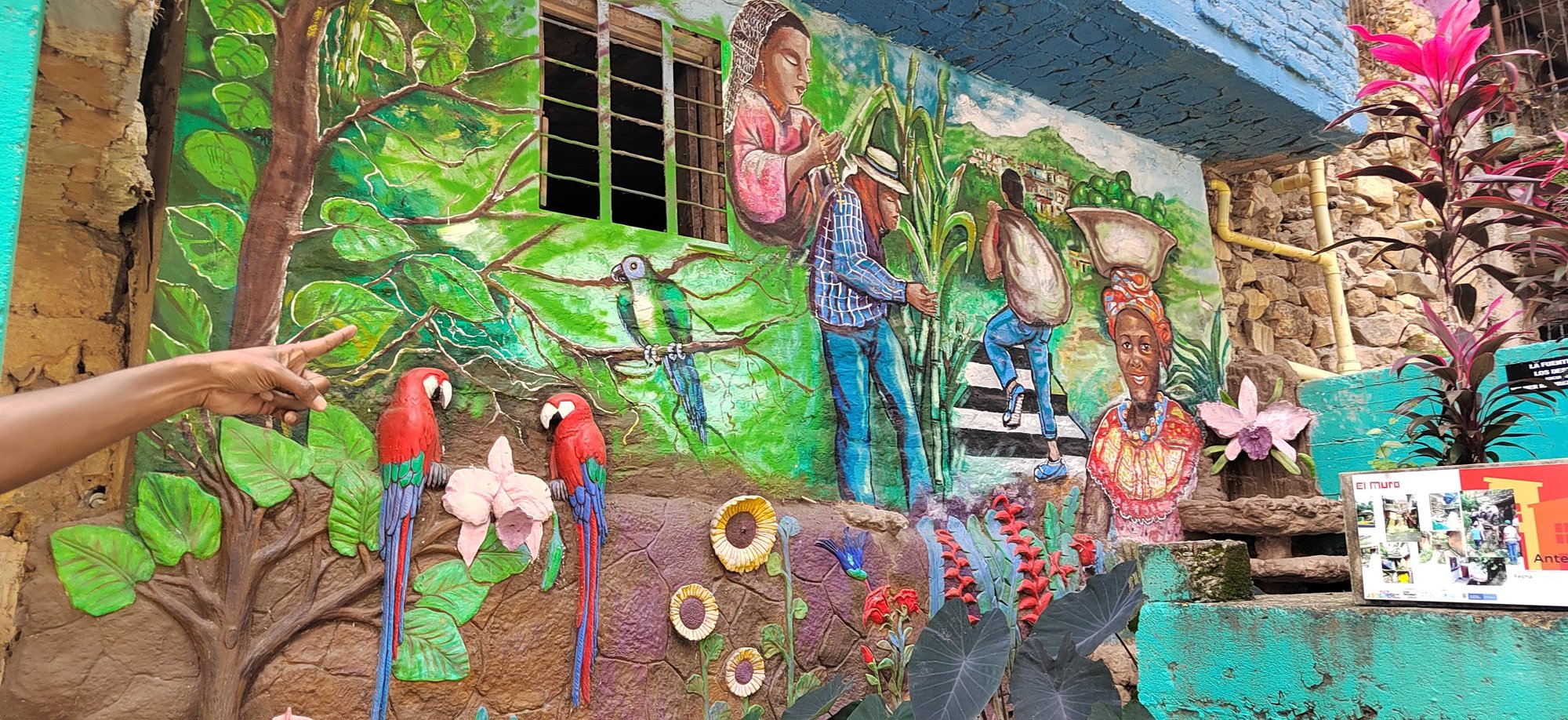
The cities most often held up as international models for liveability, air quality and equitable mobility tend to come from a small group of high-income contexts. Yet some of the most ambitious urban policy experiments of recent decades have unfolded in three Colombian cities — Bogotá, Medellín and Cali — under conditions that wealthier cities rarely face: extreme inequality, sustained armed violence, and the collapse and slow rebuilding of public trust. The lessons are not academic. They are practical, hard-won, and increasingly relevant wherever cities are working on clean air, urban violence and the social fabric.
This briefing draws on field visits across the three cities, including meetings with policymakers, programme leaders, foundation partners and community organisations. It is offered as a starting point for dialogue, not a transferable blueprint. Colombian urban policy works because it is rooted in specific political and institutional contexts. The interesting question for cities elsewhere is not whether to copy these initiatives, but what their underlying logic — community-led design, public health framing, public-private partnership for continuity — has to teach.
Three cities, three faces of urban transformation
The character of each city shifts from block to block. Bogotá reveals itself in layers: historic Candelaria with its murals and traffic; the affluent leafy streets of El Retiro; the sprawling outskirts where inequality manifests in informal settlements clinging to the hillsides. Medellín, once a byword for danger, is now a city where the buzz of Comuna 13's graffiti tours and the nightlife of El Poblado coexist with quiet residential calm in Laureles. Cali's Afro-Caribbean cultural energy plays out against the more recent scars of social unrest.
What unites the three is a willingness to treat public space as the principal site of policy: a stage for resilience, contestation, and the contested boundary between progress and struggle. In each case, the urban policy framework links environmental, social and security agendas in ways that other cities tend to keep separate.
Bogotá: environmental justice as urban policy
Bogotá, home to over eight million residents at 2,640 metres in the Andes, sits at the intersection of national and local political authority. Its urban governance combines centralised national policy with strong local leadership, often innovating in environmental action and social equity. The challenges are substantial: sprawling informal settlements, severe air pollution, and stark socio-economic divides.
What distinguishes Bogotá's recent agenda is the refusal to treat environmental policy as separable from social justice. Supported by international networks including C40 Cities and the Breathe Cities initiative, the city has developed instruments that address air quality, inequality and urban form simultaneously. Three are worth particular attention.
Zones for Better Air Quality (ZUMAs)
In neighbourhoods with the city's worst air quality, Bogotá established ZUMAs — zones combining road quality improvements, green infrastructure and community-designed interventions. ZUMAs are notable not as a technical fix but as a platform: vulnerable communities are given agency over the environmental conditions in which they live. The instrument was inspired by clean air zone models developed elsewhere but deliberately adapted to the hyper-local context, avoiding the "cut-and-paste policy" trap that frequently undermines international policy transfer.
The Women Who Re-Green initiative
Through a conditional cash transfer programme, women in vulnerable neighbourhoods have received environmental training and income while transforming public spaces. The initiative empowered over 8,000 participants, fostering environmental leadership while providing financial independence. The programme's significance lies in how it reshapes urban narratives: long understood as caretakers of homes, women have become caretakers of the city's environment, with policy explicitly building on rather than abstracting from existing patterns of social labour.
Urban agriculture and private-sector continuity
From the Botanical Garden to micro-plots between dense housing blocks, urban agriculture has become a lifeline. Projects supported by partnerships including the Éxito Foundation turn small spaces into community hubs, providing food security during crises and nurturing connections among residents. The deeper structural lesson concerns continuity: by involving private-sector partners, programmes can survive the four-year political cycle that frequently kills good urban policy initiatives in their second term.
The fight for a just, inclusive, and climate-resilient future happens block by block, neighbourhood by neighbourhood.
Medellín: from infamy to innovation
Nestled in a valley surrounded by the Andes, Medellín's transformation from one of the world's most dangerous cities in the 1980s and 1990s to a global model for urban innovation is well documented. Less well understood is the policy architecture that made it possible. Medellín's governance approach has emphasised participatory planning and public-private collaboration, while challenges including ongoing inequality, informal housing and urban violence remain unresolved.
Comuna 13: a tapestry of resilience
Comuna 13 is Medellín's signature regeneration project. Outdoor escalators connect steep hillside streets to the urban core, while graffiti, music and guided tours have transformed a neighbourhood once defined by violence into one of the city's most visited cultural spaces. Tours run by residents provide income and community pride, rewriting the neighbourhood's narrative from the inside.
The deeper lesson concerns culture as a tool for violence reduction. Art and music are not aesthetic additions to regeneration but instruments of resistance, healing and economic opportunity, with cultural tourism providing a supplementary economy that supports local residents directly rather than displacing them.
The MetroCable and the geography of opportunity
Medellín is the only Colombian city with a metro system. The MetroCable, a gondola network introduced under Mayor Sergio Fajardo in the early 2000s, connects neglected hillside neighbourhoods to the economic core in minutes rather than hours. The system's significance is symbolic as well as practical: it represents the principle that geography should not be a barrier to opportunity. Integrated with social programmes, it became a platform for empowerment rather than simply a transport intervention.
Public-private partnership at scale
The Éxito Foundation collaborates with local leaders to create urban gardens whose produce is sold through major supermarket chains. The model is not philanthropy but place-based, sustainable urban renewal that integrates business goals with social impact at meaningful scale.
Cali: health-led approaches to violence and unrest
Cali, Colombia's third-largest city and a cultural and economic hub deeply influenced by Afro-Colombian heritage, faces challenges including high inequality, youth unemployment and the lingering social impact of the 2021 protests. Its urban governance has long emphasised health-oriented approaches, drawing on the public health expertise of leaders including former Mayor Rodrigo Guerrero, who pioneered the public health model for tackling urban violence.
The Valle Commitment
Following the 2021 social unrest — which made Cali one of the epicentres of nationwide protests, exposing systemic inequality, poverty and unemployment compounded by the pandemic — Propacífico launched the Valle Commitment programme. The initiative addresses structural inequalities through a combination of food security, youth empowerment and community-led violence prevention.
The food security strand established community dining halls during the protests and developed urban gardens for sustainable food access. To date, 36 urban gardens have been cultivated and over two million food portions distributed, addressing immediate hunger while building longer-term community resilience.
Youth empowerment: Forjar Oportunidades and Abriendo Caminos
The programme's cornerstone is its focus on young people in vulnerable communities, offering alternatives to cycles of violence and poverty.
- Forjar Oportunidades (Forging Opportunities) targets individuals aged 18 to 28 with personalised pathways combining psychosocial support, skill-building and restorative activities. Participants are guided toward formal employment, entrepreneurship or further education, transitioning from informal economies into stable livelihoods.
- Abriendo Caminos (Opening Paths) is a place-based violence prevention programme employing trained "violence interrupters" working in high-risk neighbourhoods. The programme addresses the social norms that perpetuate violence, with many participants subsequently transitioning into Forjar Oportunidades for deeper individual transformation.
Other community-led initiatives
The Ruta Isabel Pérez project transforms the context of Siloé through cultural and educational programming including mentoring during local conflict disputes, recycling, urban agriculture and community green spaces. The Fundación Club Campestre de Cali focuses on improving quality of life for employees and neighbouring communities in Comuna 18, with initiatives spanning education, employability, housing and environmental stewardship.
Data and the public health model of violence reduction
Cali's approach under former Mayor Rodrigo Guerrero pioneered a public health framework for urban violence: hotspot policing combined with restorative programmes that address root causes while building trust in local institutions. Initiatives targeting young people have achieved remarkable results, including an 80% decline in homicides in key neighbourhoods. Notably, the public perception of reduced violence was linked more closely to a reduction in violent robberies than to homicide rates themselves — an empirical finding with significant implications for how cities communicate progress.
Four principles emerge from the Cali experience:
- Measure consistently. Continuous data collection on violence, poverty and education outcomes guides decision-making and enables interventions to be adjusted in real time.
- Address structural causes. Tackling poverty, inequality and unemployment directly reduces violence and social unrest.
- Combine place-based and person-based approaches. Targeting specific high-risk areas alongside individualised programmes for at-risk youth produces broader impact than either approach alone.
- Support informal economies. Entrepreneurship training enables young people to move from survival-driven activities into sustainable livelihoods.
What other cities can learn — and what they cannot
Colombia's lessons are not prescriptions. They are starting points for dialogue. Cities elsewhere — across Europe, North America and the global South — face their own configurations of violence, inequality and environmental degradation. They can draw inspiration from Colombian approaches without falling into the trap of policy mimicry.
Shared struggles, different terrain
The parallels are real. Cities with persistent air quality inequalities could draw on Bogotá's ZUMAs to prioritise interventions in neighbourhoods disproportionately burdened by pollution, using existing infrastructure as the basis for broader systemic reform. Cities working on serious youth violence could draw on Medellín's integration of art, sport and cultural mentorship into violence reduction — not as a soft addition to enforcement but as a primary instrument. Existing violence reduction units and youth strategies could adopt Medellín's more holistic approach by leveraging cultural and creative programmes more systematically.
Where the contexts diverge
Two structural differences shape what can travel. Colombia's informal economy is the foundation on which programmes like Forjar Oportunidades operate, while many European and North American cities work within highly structured labour markets. Adaptations could focus on the specific needs of migrant populations and informal workers, where the structural logic of Colombian programmes is most directly applicable.
Equally, Colombia's grassroots resilience contrasts with the more centralised planning traditions of many cities elsewhere. Embracing community-led initiatives could foster deeper engagement and longer-term sustainability, but this requires shifts in how policy is commissioned, not just delivered.
Practical applications
- Build air quality programmes that empower communities to co-design solutions, rather than implementing technical fixes from the top down.
- Expand youth engagement through art, sport and culture as instruments of violence reduction, not as soft additions to harder enforcement.
- Foster long-term private-sector partnerships that can sustain urban resilience beyond political cycles.
Towards a global dialogue on resilient cities
Colombian cities illuminate paths forward not as perfect solutions but as experiments that deserve serious attention. Their resilience lies in the ability to weave social, environmental and cultural threads into a fabric strong enough to hold communities together through real adversity.
For cities working on these questions elsewhere, the lesson is that addressing violence, inequality and environmental crisis demands more than well-designed policies. It requires narratives — stories of neighbourhoods transforming themselves, of residents taking agency, of partnerships that endure beyond a single political term. The fight for a just, inclusive and climate-resilient future, as C40 has put it, happens block by block. Colombian cities have demonstrated, over many years and across changes of government, what that means in practice.